
Background
Energenics previously purchased a 1.5kW laser welder from Factory Smart. However, they continued using CO₂ welders for manufacturing diesel tanks, limiting production to only 2 tanks per day due to slow welding speeds and bottlenecks caused by welding and grinding processes.
FactorySmart identified these constraints and proposed a production comparison trial to demonstrate how laser welding could improve workflow, reduce consumables and significantly increase output.
The Demonstration
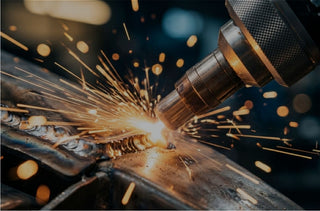
A live demo was conducted using two wire feeders on the 1.5kW laser welder to showcase weld quality and efficiency.
The Factory Manager, Bennie, was impressed with the weld finish. However, the final decision depended on whether a measurable production increase could be demonstrated.
We agreed to conduct a full tank comparison trial:
- One tank welded entirely with the 1.5kW laser
- One tank welded using the existing CO₂ welding process
Trial Results:
1. Wire Consumption
| Factory Smart – Laser Welding | Energenics – CO₂ Welding |
|
|
Laser welding used almost 1/10th of the wire, even while running two wire feeders.
2. Time Comparison
| Factory Smart – Laser Welding | Energenics – CO₂ Welding |
|
|
The laser welded tank took less than half the time to complete.
Winning Factors
Heat Management
- CO₂ welded tank became unbearably hot during welding.
- Laser welding heated only the direct weld area and cooled quickly.
- Minimal heat-affected zone (HAZ)
- Little to no distortion with the laser welder.
Weld Quality
- Laser beads are neat, uniform, and require little to no grinding.
- CO₂ welds required grinding and occasional rework due to porosity.
Adjustability
- Laser bead profile can be tailored to job requirements.
- Power can be adjusted to accommodate thicker materials.
Penetration Strength
- Laser welding penetration: up to 6mm (1.5kW machine)
- CO₂ welding penetration: approximately 2mm
- Result: significantly stronger weld.
Quantifiable Savings
- Reduced welding time
- Lower labour costs
- Dramatically reduced consumables
- Less grinding and rework
Additional Savings
- Laser welding uses Nitrogen which is cheaper than Argon gas
- Power consumption with a laser welder is 3800W on peak power, vs 10000W using an equivalent CO2 welder.
Skill Requirement
- Laser welding requires a lower skill level compared to MIG or TIG welding.
Bottom Line
By transitioning fully to laser welding, Energenics can:
- Increase production by more than 50%
- Move from 2 tanks per day to 4–5 tanks per day
- Reduce consumable costs dramatically
- Bring outsourced work back in-house
- Lower cost per part
- Increase overall profitabilityFactory Smart’s solution directly addresses production bottlenecks, improves workflow efficiency, and delivers measurable cost savings.