


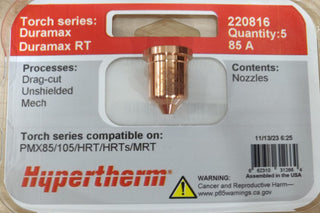
Genuine Hypertherm Duramax nozzle for Powermax plasma systems, for cutting at 65 A to 85 A with air or nitrogen. The nozzle constricts the plasma arc through a precision orifice to produce a focused, high-velocity cutting jet. Using the nozzle that matches your cutting current gives the best cut quality and consumable life. Replace it when the orifice is worn or out of round.
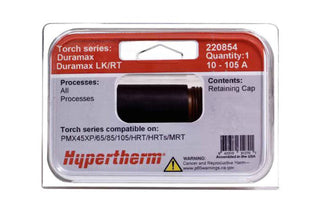
Genuine Hypertherm Duramax retaining cap for hand-held and mechanised Powermax plasma torches, used across the 10 A to 105 A range. The retaining cap screws onto the torch head and holds the nozzle and swirl ring firmly in their correct positions, ensuring proper alignment and gas flow. It is a longer-life part than the electrode and nozzle, but should be replaced if it is cracked, heat-damaged or no longer seats the consumables securely.
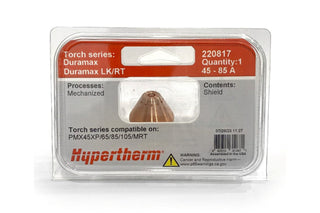
Genuine Hypertherm Duramax shield for mechanised (machine-mounted) Powermax torches, for cutting at 15 A to 85 A. The shield fits over the front of the torch, protecting the nozzle from molten metal during piercing and cutting and helping to direct the airflow around the arc for cleaner cuts. Replace it when damaged or heavily spattered to protect the nozzle and maintain cut quality.
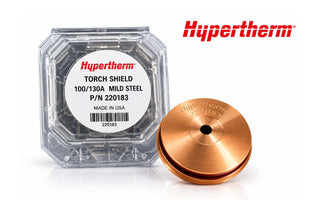
Genuine Hypertherm HyPerformance (HPR) shield for 130 A mechanised plasma cutting of mild steel, using oxygen as the plasma gas and air as the shield gas. The shield is the outermost front-end consumable: it directs the shield gas around the arc to improve cut quality and protects the nozzle from molten metal splashed back during piercing. Replace it when the orifice is damaged or covered in spatter to protect the nozzle and maintain edge quality.
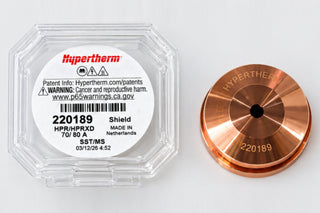
Genuine Hypertherm HyPerformance (HPR) shield for 70 A to 80 A mechanised plasma cutting of mild steel, using oxygen as the plasma gas and air as the shield gas. The shield directs the shield gas around the plasma arc for improved edge quality and protects the nozzle from molten metal during piercing and cutting. Replace it when the orifice is damaged or heavily spattered.
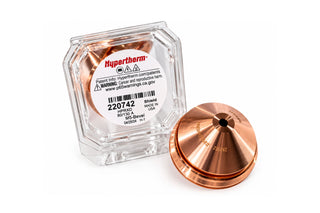
Genuine Hypertherm HyPerformance (HPR) shield for 80 A to 130 A bevel cutting of mild steel with a bevel-capable HPR torch, using oxygen as the plasma gas and air as the shield gas. Its tapered profile provides clearance to the plate when the torch is tilted, while directing shield gas around the arc and protecting the nozzle from molten metal. Replace it when the orifice is damaged or heavily spattered.
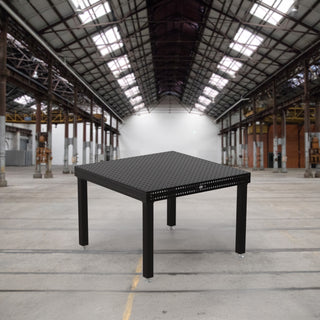
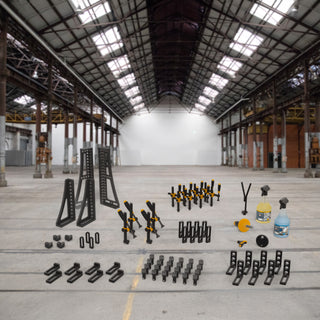
Modular, precision welding and clamping tables for high-performance fabrication
Siegmund welding tables are industry-leading modular fixturing platforms designed for accurate, repeatable welding, clamping, and assembly work. Made from specially hardened steel and finished with a unique plasma-nitrided coating, these tables provide unmatched durability and positioning precision for even the most demanding metalworking environments.
Used across fabrication shops, training centres, and production lines, Siegmund welding tables serve as flexible, high-precision work surfaces for jig setups, part alignment, and welding operations. Their grid-based design allows for quick configuration and adjustment—reducing setup time and improving part consistency.
Also available is a range of jigs and features customised for use with the welding table, including squares, bolts, clamps, stops and more. See here for a full list.
From R659 021.00 ex VAT
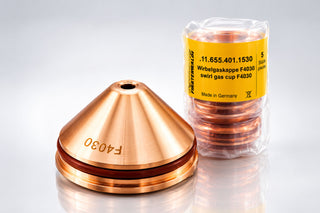
Genuine Kjellberg F4030 swirl gas cap (3.0 mm bore) for mechanised plasma cutting at 90 A to 200 A with oxygen or compressed air. Fitted over the nozzle, it guides the swirl gas around the plasma arc to keep the arc stable and tightly focused, while protecting the nozzle from spatter and heat during piercing and cutting. A cap in good condition is essential for square, clean cut edges and consistent consumable life.
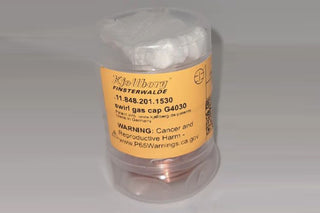
Genuine Kjellberg G4030 swirl gas cap (3.0 mm bore) for mechanised plasma cutting at 90 A to 200 A. The swirl gas cap fits over the nozzle and directs the secondary (swirl) gas around the plasma arc, helping to constrict the arc, stabilise the cut and shield the nozzle from spatter. Replace it when it shows heat damage, spatter build-up or a deformed bore, as a worn cap reduces cut quality and shortens the life of the other consumables.